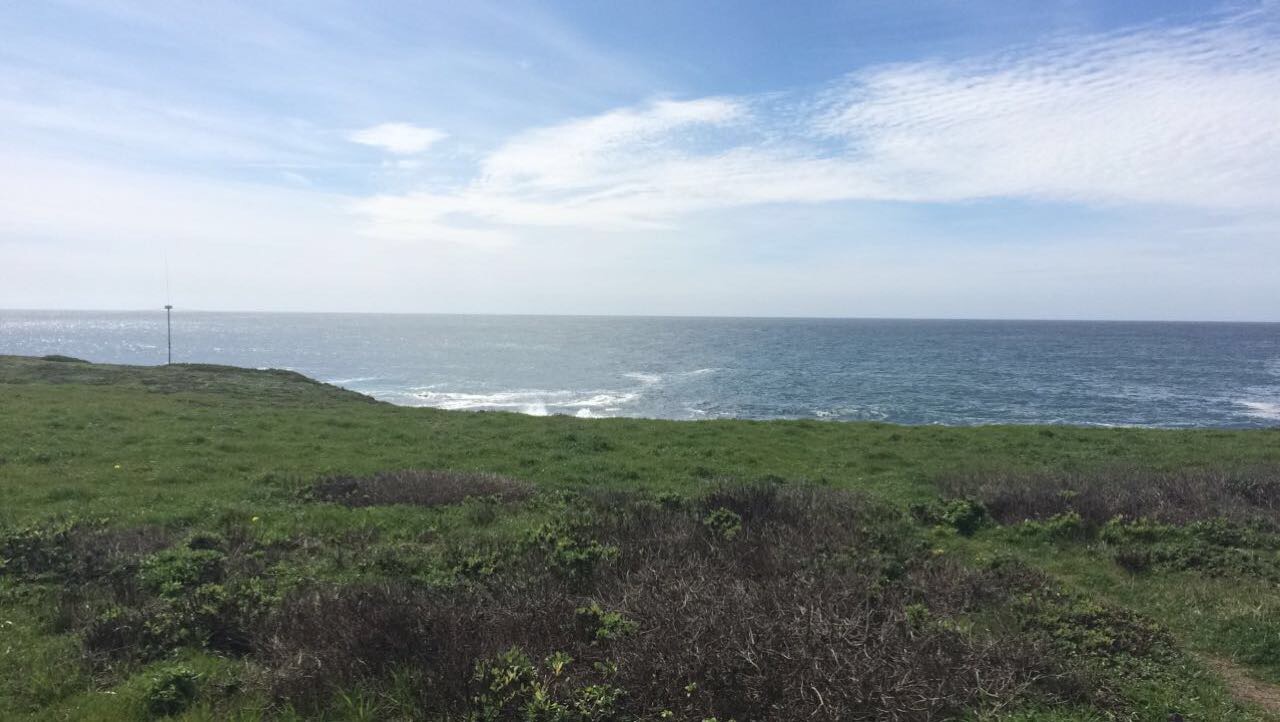
Our recent field trip to the UC Davis Bodega Marine Laboratory was an opportunity to learn about our local marine life and for students to attain primary resources for projects relating to problems within the ocean. I personally am not focusing my environmental project (see posts below) on issues relating to aquatic life; however, the experience was still very interesting and worthwhile. The ocean is such a diverse ecosystem and getting to see various creatures and to understand a little bit more was a great opportunity.
The trip was such a unique opportunity to the ideal research center. The laboratory is located perfectly in order and absolutely breathtaking to see.
The entrace to the research center held a mini tide pool, complete with flowing water currents and different aquatic animals. Before beginning the tour we were encouraged to hold and observe the creatures.
Above are purple sea urchins and seastars: both types of marine life prevalent in tide pools.
During the tour we got to view other creatures as well and to learn briefly about the mutations they can undergo when pollution invades their waters. I can imagine that all the students trying to prevent water pollution must have found lots of valuable information.
I mentioned in the previous post that I had an idea for an alternative source of energy, and now that I have developed my idea into something potentially feasible I am ready to share it. But first of all, let me explain the project guidelines.
First we are supposed to investigate an environmental problem and to write a research paper on the topic. Then, using our prior research, we are supposed to create a solution to the problem. Next we will create a social media campaign for our idea, and finally we will make a Ted Talk about our problem and solution.
Because I am very interested in the field of engineering, I wanted to choose a topic where I could potentially engineer something. Then I got the idea of an alternative form of engineering and decided to make that my topic. Wind turbines are based on the premise that wind is in motion, and continually is, no matter how much of its energy is converted into energy. I looked in the environment for something else that is often in motion with the same principles, and I thought of rain. Rain is definitely in motion, falling at an acceleration of 9.81 m/s^2. Why not capture this energy with the same concepts of wind turbines?
https://goo.gl/R1OoTA
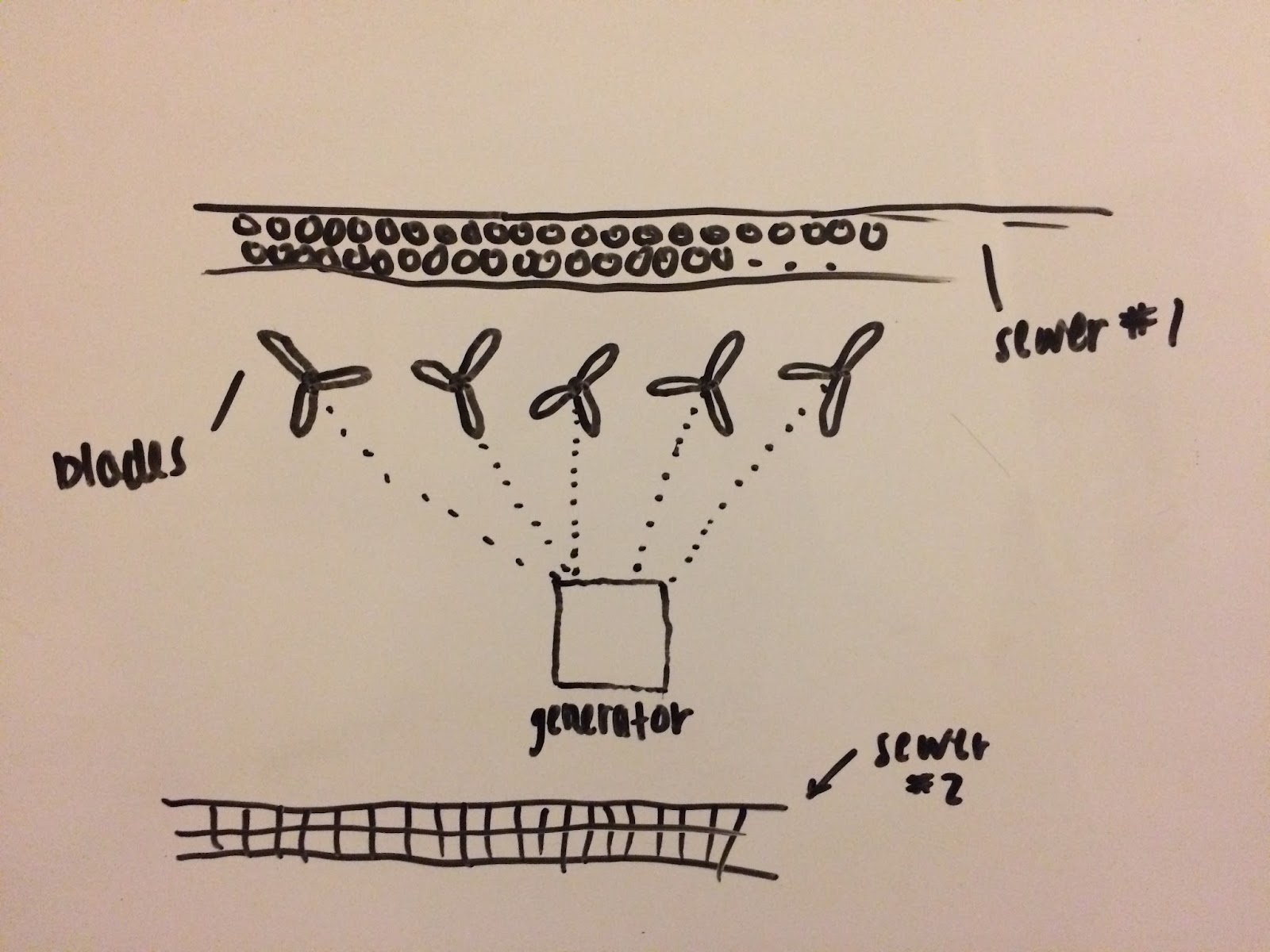
My idea is of making mini water turbines and to position them beneath sewer grates, but above the actual sewers. There tends to be a lot of unused space here, and with the turbines here the water could come through and then continue in the same direction as it originally goes. The basic idea is that I could create a Savonius vertical axis wind turbine (VAWT) as shown on the right. It would be positioned horizontally so that the falling water would make it turn (after falling through the sewer grates). A system of several VAWTs (or really HAWTs) would be connected to a generator that could make electricity. Another benefit to the sewer location is the water turbines could exist in urban areas where electricity is most used. In addition, the turbines would not be taking over any ecosystem or important land.
From my research thus far, I have not found any related devices to my idea. There are water turbines out there, but they are limited and have some flaws that actually pollute the environment. An article from Science AAAS explained that water turbines in dams actually release large amounts of methane into the atmosphere, actually having a negative effect on the environment. Also, these giant machines cannot exist ubiquitously, because they require large water sources.
The fact that I can model my design after wind turbines and am not entirely starting from scratch is encouraging. I think that this idea really could work, and the only worry I really have is the generator. Making the turbine seems very doable since I am going to have assistance from the welding class at our school, and it does not have many different mechanical issues involved. However, to actually create the electricity the turbine needs to be connected to a generator. Generators with less that 100 Watts or so can be created, but for the machine to actually be a success I would need a pretty big, high-tech generator. These can be bought, but as pretty expensive. I am not totally sure how I will approach this problem, so for now I am sticking with the things I can do such as the research paper.
In another effort to help stimulate ideas for our environmental project, we watched a Ted Talk called "The row-bot that feeds on pollution" by Jonathan Rossiter. The video overviewed a project that Rossiter had developed, that was essentially a robot that could consume oil and chemicals that have polluted bodies of water. Not only that, this bot could convert those chemicals in the electricity it needed to continue to function.
The "row-bot", shown above, was designed after actual animals: the basking shark and water boatman. The bot got its uniquely shaped mouth from the basking shark, and the little paddles from the water boatman. The reminder here is that robots do not have to be any certain shape! Rossiter mentions that most robots we picture nowadays are resembling humans or the Terminator; however, robots can be in any convenient shape. After sharing his idea Rossiter went on about the possibilities of future robots, in hopes to inspire other engineers. He argued that robots can be made out of many different materials, and they can be optimized to be more eco friendly, or to do unheard of things.
This video was encouraging to watch, as I am dealing with electricity in my environmental project as well (more info soon!). To know that generators could potentially be made of materials different from expensive products is something I really want to investigate and possibly use in my project.
Aside from that, I think Rossiter came up with a brilliant idea, and I hope it can actually work. My worry is that the little robots would be eaten or damaged in the unpredictable environment they would work in. They seem a bit fragile, but I am sure they will be placed to an appropriate strength if the idea becomes widespread. I think the row-bot could be an excellent help to our oceans, lakes, etc., and I hope to see them implemented.
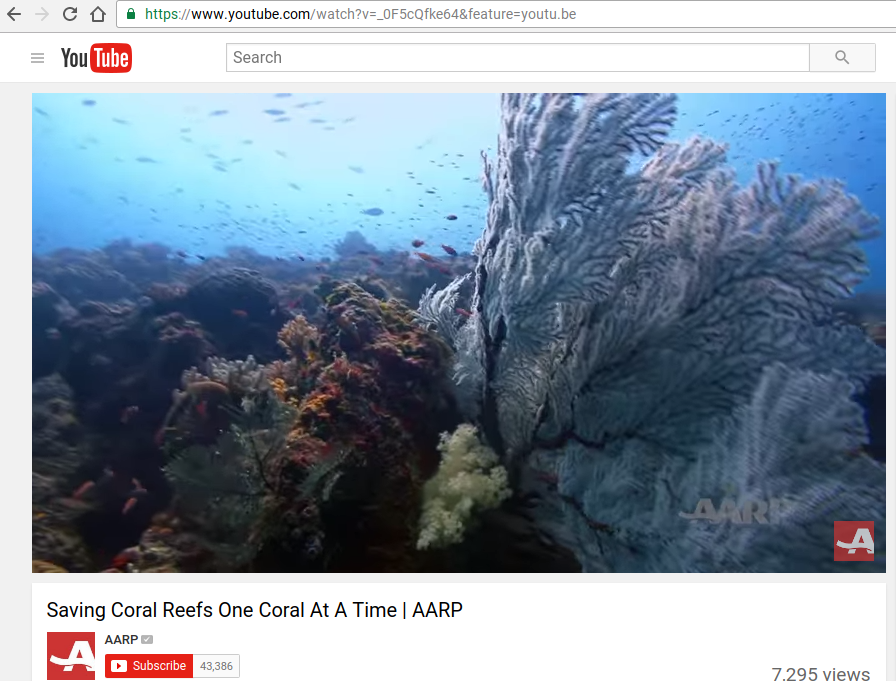
To commence our environmental unit, we began to explore different environmental issues. The objective is to determine one problem that peaks our interest, which we will ultimately look for a solution towards. To get a look into the different environmental problems, we watched short videos, such as the one seen below about saving coral reefs.
The videos gave us some insight about what is going on in our world, and we got to choose the ones that captured our interests most. We would then do further investigations into each of these. I decided to learn more about the issue with the coral reefs, and also looked into waste management problems and using alternative forms of energy. For each topic we identified the issue and then found a credible source relating to the article to learn more, which we used "Diigo" to annotate.
Finally we created a concept map that would help stir up ideas for solutions, although we would not necessarily be creating our own solution to these problems. The general dilemma I found from my explorations with coral reefs was that over 25% of the world’s coral reefs have been lost, and these reefs account for ⅔ of the emitted oxygen on our planet. Clearly this is a huge mess for our civilization, which is why people have been looking for solutions. We learned about marine biologist David Vaughan's solution, which was basically fostering the accelerated growth of coral reefs. In an article from Oregon StateI learned more about the problem and was then able to decipher some of the problems that account for the overarching problem, as seen in my concept map below.
Creating concept maps is a great way to discover issues that add to bigger problems, but with more feasible solutions. For example, it would be a much smaller task to deal with the the problem of over-fishing than the loss of coral reefs in general, although the solution to the sub-problem would help lead to a solution for the overall problem.
My second investigation involved waste management. The problem in that area is that frequently used products take long periods of time to decompose, leaving the Earth with lots of waste. An article from LibreTexts had some enlightening ideas that complemented the initial video I watched about the topic.
This diagram is slightly different, because it describes problems that stem off of the waste management ordeal. Still, these are smaller tasks that can be taken on to help the environment and help with other issues as well.
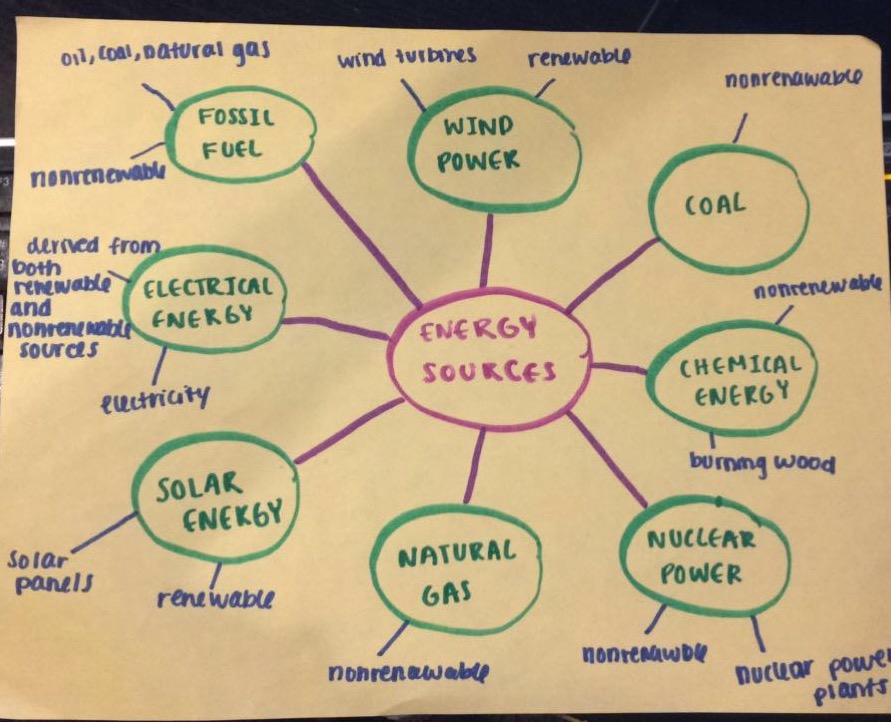
My final research topic was alternative forms of energy. Energy is costly and limited, therefore an alternative source is investigated that captures energy from the wind. I got to see these neat machines that look like trees, that capture energy from the wind around them. After the video captured my interest, I found an article from CNN that allowed me to fully understand the problem and the different sources of energy we use today.
One key difference between NEW core and other classes is the concept of self-grading. This involves students reflecting on their works and efforts and giving themselves a grade. What usually occurs, is we generate a claim about what grade we deserve, and support it with evidence and reasoning. Our teachers can then accept this claim, or provide a counterclaim. Throughout grading periods we store all our evidence in a document with evaluations that we have provided, and comments from our teachers.
This whole effort to self-evaluate is proven to advance students academically by huge standards, and is important in the growth of students and their abilities. Some key questions for students to consider in evaluating themselves, from John Hattie, Professor of Education at Auckland University, New Zealand, are as follows:
Are you satisfied with your learning?
Are you satisfied that you demonstrated your knowledge and skill?
How does your work compare to the expectations on the rubric?
With which parts of the assignment (project, performance, etc.) were you most satisfied?
How closely does your work on this assignment (project, performance, etc.) reflect your learning?
Why do you think this assignment worked for you?
Were there any parts that didn’t work?
How did you do the assignment/project? Be specific.
Were the strategies that you used effective in helping you reach your goals?
What learning strategies were helpful? Explain.
What would you have to add to learn more, do better, etc.?
On a scale of 1 to 10, how would you rate your effort?
Did the amount of time, effort and strategies used help you reach your goal?
If you were to do this over, how could it be improved?
What can a teacher do to help you?
What can I do to increase the value of this assignment/project, etc.?
Hoglund, Bob. "Students Learn Through Self-Evaluation and Creating Their Own Goals and Expectations." Hattie Research Choosing Excellence (n.d.): n. pag. Web. 15 Feb. 2017.
Rhode Island Psychological Association explains the connection between mental health and daily life as, "When we are free of depression, anxiety, excessive stress and worry, addictions, and other psychological problems, we are more able to live our lives to the fullest". In the previous unit we explored nutrition and how to better one's physical health, and with the last unit we turned to an equally important unit. While one may be in excellent physical shape, their mental state may be unhealthy and pose a major concern. This unit was certainly more emotional and feelings-oriented than our nutrition unit, but it ultimately led to some important discoveries and new perspectives. Throughout our mental health unit we have delved into the causes of mental health disorders, the characteristics of the different diseases, and how to ultimately combat them.
One step in our Romeo and Juliet DNA lab.
Speakers from "Project Success" and Dr.Stringaris from the "Understanding Depression in Teens" webinar both concur that most common mental health disorders stem from environmental causes, or from genetics. In order to more fully understand genetics, we studied DNA, and got to interact directly with the nucleic acid in our Romeo and Juliet DNA lab. In this experiment we extracted the deoxyribonucleic acid directly from the nucleus of the cells extracted from the cheek tissue within different suspects. We came to understand that each person has a different genetic code, based on the ordering and amount of nitrogenous base pairs within their chromosomes. Because each person has a different genetic makeup, some are more prone to experiencing mental health disorders than others. The environmental causes are the more predictable causes, such as the loss of a loved one, bullying, or a traumatic event. This was seen firsthand in our "circles" where students shared the stressful events in their lives that were still affecting them mentally today. Whatever the cause, the mental disorder that develops is an issue to be treated just as seriously as a physical issue, and can be combated.
Many mental health issues are commonly addressed, such as depression and anxiety. Yet others can be forgotten, such as post traumatic stress and eating disorders. We explored all different types of disorders, learning that Anorexia Nervosa, Bulimia Nervosa, and Binge Eating Disorder, are all potentially life threatening diseases, that involve an unhealthy intake of food. Substance Abuse also occurs from a lack of control in the amount of substances consumed. PTSD is experienced by 50% of veterans, according to Sebastian Junger in a Ted Talk, yet it may be the problem of our society rather than the soldiers. Our nation is isolated and lacks the tight bonds that could prevent PTSD, and perhaps even disorders such as depression. Stringaris claims that adolescents with major depression are up to 30 times more likely to die of suicide, and this is closely supported by research Project Success presented to us. We witnessed one character admit that she would rather commit suicide than face an event that appeared traumatic to her, in our reenactment of Romeo and Juliet Act IV. Clearly our nation is struggling mentally, not just physically as we learned in the nutrition unit. The question now is, how exactly do we prevent these mental disorders from occuring?
Romeo and Juliet Reenactment Act IV
Sticky notes with kind messages displayed at an elementary school, and the virtual bulletin board.
The brain of each person reacts slightly differently to different amounts of trauma and stress, being that our genetic code causes each person's brain to vary in structure. If one can overcome the trauma they experience, without letting it linger in their minds for an extended amount of time, they might avoid depression. Others can provide comfort to their minds through meditation or yoga. We had the opportunity to try this approach, which involved clearing the mind and letting yourself totally relax. Different disorders require different approaches for treatment, such as with substance abuse. Here the mind becomes so addicted that other brains need to intervene, which is exactly what happens in Alcohol Anonymous, a program we learned about early on into our unit. Some people require something to totally take their mind off of their issues, which can be found through developing a passion. We got to explore our passions and share them, which can often be a solace or a getaway like the meditation. In one project I created a campaign in an elementary school to spread kindness, which in something that can be underrated in terms of mental health. Jennielynn Holme, of Catholic Charities, explains that in instances such as homelessness, a smile can make the person feel connected and prevent the isolation that tends to occur. The project involved spreading hundreds of kind sticky notes throughout the halls, and having the students create their own. In addition, I created an online bulletin board for people to spread their kindness, which is a therapy in itself. Whatever the disorder might be, there is a healthy way to turn it around, and we learned a lot of important ways within these last two months.
Our core mixes in fun activities,
like this science challenge,
to balance our stress levels
with the plethora of assignments
we are dealing with.
Psychologist Kelly McGonigal taught us through a Ted Talk that the way one views stress can affect their mental health, and ultimately their whole well being. Similarly, a few weeks ago I heard an analogy about how stress is like holding a glass of water - you are unaffected by the weight of the glass unless you hold on to it for too long. We all need to remember to set down that glass before it paralyzes us, and I think that is something very relevant to the current topic. Life can get chaotic, especially as a highschooler, and it is important to find a way of letting go of any stresses before they become larger than they need to be and create the mental disorders most common for people our age - depression and anxiety. This unit has allowed me to develop empathy towards people going through mental disorders such as PTSD, eating disorders, and substance abuse, but most of all I think I can say it showed us, the most sensitive group to anxiety and depression, how to avoid holding on to that glass that can really just be set down.
"Useful Psychology Information: Importance of Mental Health." Rhode Island Psychological Association. N.p., n.d. Web. 31 Jan. 2017.
In the previous post I mentioned that NEW core should adapt the STEM type competitions, and today we did just that. In our groups we had half an hour to make the safest, tallest, and longest water slide that we could, for a little lego man to travel through. Most groups went straight to cardboard, making ramp-like structures, that provided great length and height. We decided to do something that would be more water proof, and turned towards plastic cups. The little lego man travelled well through our chain-like structure, however he unfortunately got a tiny bit stuck during the actual test run. Still, I think our water slide was the most unique!